

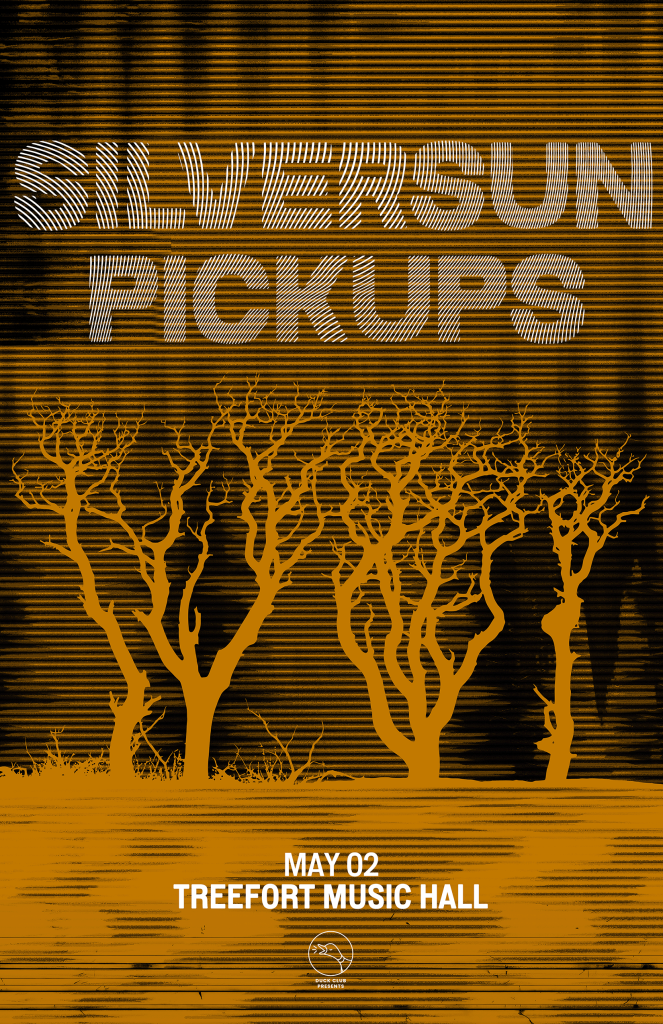
Silversun Pickups
Friday, May 2nd, 2025
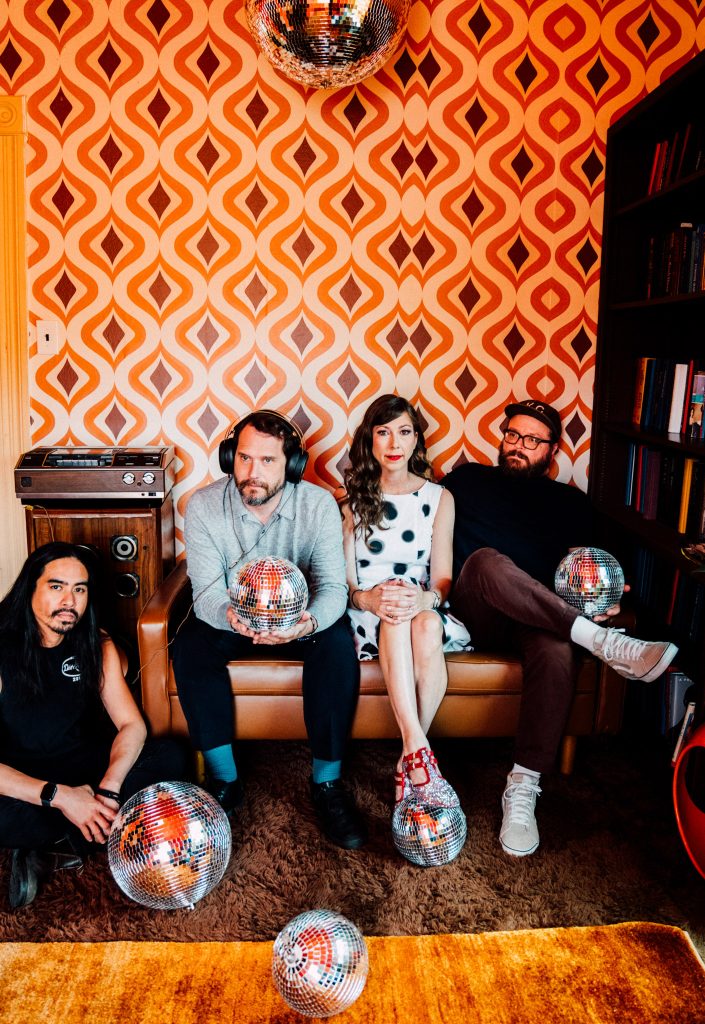


Silversun Pickups’ sixth album Physical Thrills came together as a serendipitous accident during a dark time. The LA band began 2020 by touring in support of their record released the previous year, Widow’s Weeds. But the pandemic halted those plans, with the members including guitarist and singer Brian Aubert, bassist Nikki Monninger, drummer Christopher Guanlao, and keyboardist Joe Lester, finding themselves stuck at home. In that resting period, Aubert wasn’t focused on Silversun Pickups; instead, he channeled his energy into taking care of his son, Nico, while his wife Tracy worked.
But as much as his focus initially shifted from the band, he couldn’t escape the new melodies germinating in his head. “I would sneak off and start writing these songs, and I didn’t know what they’re for because I didn’t really think about Silversun on any level. I was just doing it to keep myself calm and keep myself company,” says Aubert. The songs were so different from what he’d previously written for Silversun Pickups that he initially thought he was writing a musical. There were “dream shanties,” gentler vocals, horror-inspired sounds, and other exciting new elements coming to mind.
The band finally was able to gather in person for a live-streamed acoustic performance on Halloween for The Dark Zone Network’s virtual music festival Queen Mary, and it was there that Aubert revealed the new material to his bandmates. They readily embraced the new direction—and so did producer Butch Vig. The band reunited with Vig, who first worked with Silversun Pickups on Widow’s Weeds, recording the record at the famed producer and Garbage member’s home.
When Aubert first reached out to Vig, he wasn’t sure if the band was making an EP or a full record; Widow’s Weeds was still fresh for Silversun Pickups. But once Aubert made plans to visit Vig and play him what he had, the music began pouring out. He immediately began recording with Vig, later having the rest of the band join.
Once the band began working on Physical Thrills together, they made some of Silversun Pickups’ most stunning songs yet. The record doesn’t depart drastically from the sound the band’s fans know and love, but rather enhances it with previously-unexplored fixtures at play.
Physical Thrills was colored by the pandemic, but isn’t meant to be solemn; instead, Aubert explores his own comfort in the temporary, newfound isolation. There’s a juxtaposition of playfulness with angst from having so much time to process untapped emotions. That’s something that comes through in the album’s instrumentation, too, with wide-ranging sounds that transform according to the weight of the lyrics.
There are tracks with shoegaze-infused distorted synths and guitar, like opener “Stillness (Way Beyond)”; bouncy, pop-tinged danceable tunes (“Empty Nest,” “Hereafter (Way After)”); pared-down ballads (“Alone On A Hill”); and a collection of “dream shanties,” as Aubert refers to them.
The titles of those shanties call back to “Dream At Tempo 119” off the band’s 2006 debut record, Carnavas, tying the band’s beginnings with the current, evolved iteration of Silversun Pickups. But, this time, the instrumentation matches the lyrics. Aubert forgoes the heavy guitars to instead create magical lullabies: “Dream At Tempo 050,” “Dream At Tempo 310,” and “Dream At Tempo 150.” Each carries a secret code in the title with numbers personal to Aubert.
With such an exploratory record, the band members felt free to traverse new ground. Guanlao, who usually shies away from fills on drums, took inspiration from The Beatles documentary Get Back, throwing some into Physical Thrills, influenced by Ringo Starr’s work on Let It Be. Whereas for Monninger, this record allowed her to showcase her vocals at the forefront more than in previous work. Joe also took a larger role in composition on this record, writing the piano part for “We Won’t Come Out,” which became the backbone for the song.
The making of Physical Thrills also allowed for whimsical moments, including Aubert creating a distinct tapping noise by incorporating the sound of drumsticks hitting Vig’s Grammy in “Hidden Moon,” and playfully pelting balloons at Monninger while she played “Hereafter (Way After)” on bass to create less tension.
While this record features such an eclectic mix of melodies, each song is interconnected with each other, meant to be experienced as a whole body of work. “All of our records are designed for people who want to listen to them all the way through and hopefully stick around with it,” says Aubert. “After a while, maybe you’ll catch on to the little things—not just the [pattern of] the dream songs, but maybe you’ll hear that, and you’ll hear a melody from the first song in the last song. There are crossover things happening.”
Lester says, “Physical Thrills is exactly the record that we wanted to make, which I’m really stoked about because sometimes you look back and think, ‘Well, that’s maybe not exactly how we would have done it’ when you go back and listen to it years later.’ But I feel really proud of this one. I think the songs that Nikki sings on are like the best ones we’ve done for her to sing on. The lyrics are better than they’ve ever been.”
Monninger adds, “We’ve been together for twenty-two years; it’s really interesting that we still love doing this. We know that we’re fortunate to still be together after all these years, seeking out the silver lining. I feel like we still have many more things to say, and we’re so happy with how this album turned out.”
Rocket
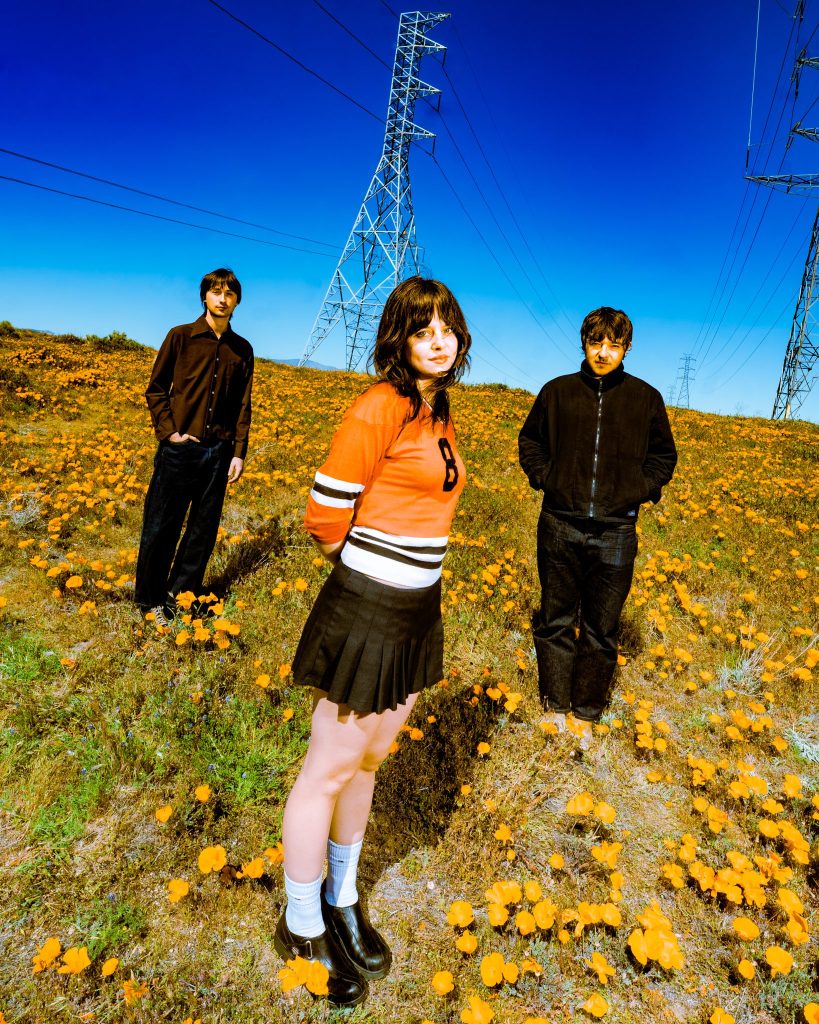
Rocket have had a busy few years. The Los Angeles crew with friendships stretching back to their childhood formed in 2021, convening in an unmarked shed to put their debut EP to tape. Despite it being the first time Alithea Tuttle (vocals, bass), Baron Rinzler (Guitar), Cooper Ladomade (Drums) and Desi Scaglione (Guitar) had ever seriously approached the idea of a ‘band,’ they seemed to arrive fully formed with combustible, airtight songs.
R is for Rocket, the quartet’s remarkable debut album, is a joyride through sonic terrain that is gloriously loud, anthemic, bombastic and beautiful, with instantly captivating songs that achieve the rare feat of evoking nostalgia while sounding completely new. Tracks such as “One Million,” “Wide Awake,” “Crossing Fingers” and “The Choice” display Rocket’s dreamy intensity, with their thick blast of guitars and driving rhythms balanced by Tuttle’s sweetly hypnotic vocals and dynamic shifts that leave you weak in the knees. The band’s jagged, fuzzed-out sound has antecedents in ‘90s guitar bands like Sonic Youth and My Bloody Valentine, but Rocket are doing something uniquely their own with those touchstones. It’s no wonder they are widely considered one of the most promising guitar-forward bands of their generation.
While the album builds on the energy of their critically lauded Versions of You EP, R is for Rocket is also hugely evolutionary, elevating the band’s craft in major ways. By the time they began work on the album in early 2024, they’d been on a near constant touring schedule, spending countless hours on the road opening for their heroes Ride, Sunny Day Real Estate and Silversun Pickups, and writing in their modest studio – a back house in drummer Cooper Ladomade’s parents’ yard – both refining and expanding their sound.
“All of the touring led to the songs changing for the better,” says Tuttle, “because we got to play them for so many different kinds of audiences and hear what worked and what didn’t.” Whenever they got home from a tour, they were infused with new ideas for how to finish the in-progress tunes, and many were upgraded in major ways thanks to the time Rocket took to hone them. “Recording the second half of the album eight months after the first half gave us a lot of time to think about what we were doing,” says Scaglione. “We ended up re-recording three songs because we felt like we could just do better.”
With guitarist Desi Scaglione again at the helm as their producer, Rocket logged time at two Los Angeles studios that provided the perfect balance between those extremes. They tracked the heavier moments during sessions at the Foo Fighters’ Studio 606 in Northridge, where they could get the massive drum sound they wanted for tracks like “Crossing Fingers” and “Wide Awake,” and then the more introspective elements were recorded at 64 Sound in Highland Park, which offered an array of tasty vintage gear that was ideal for the quieter, more intimate tunes.
One of the key things they did differently from the EP was reimagining how to achieve the massive, thorny guitar sound they had in mind. “We’d normally reach for a Big Muff pedal to get a distorted tone,” Scaglione explains, “but this time we tried to only use cranked amps for any distorted and overdriven tones.” They experimented with double tracking drums on the song “Wide Awake” – an awesome and unexpected counterbalance to the more soaring, disembodied feeling of the melody. Says Rinzler: “It feels like a lucid dream. It’s hypnotic, with the guitar and melody playing off each other to create a drone of sound that feels inescapable. And then, underneath that, there is a bone-crushing double drum kit, and you can hear them slamming into each other like atoms in the Large Hadron Collider.” For the first time, the songs are adorned with flourishes of piano, a Farfisa combo organ and mellotron on the melancholic “Number One Fan.”
At the same time, they wanted to be sure the recordings would still have the visceral impact of their live shows, and Scaglione worked diligently to make sure they authentically captured that kind of sonic intensity by recording everything live. “The most satisfying part of making this album to me was completing it from start to finish on our own,” he says. “To make decisions that get you to the end goal by yourself is very rewarding, and in some ways therapeutic.”
Tuttle also found herself exploring new thematic ground in her lyrics, delving into romantic relationships and their challenges for the first time. “One Million,” for instance, is about wanting someone to meet you halfway but not knowing if they ever will. Tuttle says it connects with “the feeling of doing everything you can, going above and beyond for someone, knowing that you would wait a million years for them just to notice how important they are to you. It’s about learning to be okay with the fact that you might always love them more.” And “Crossing Fingers” tells the story of “falling so deep into a partnership with someone and bearing the weight of the fear of messing it all up.” And she calls “Number One Fan,” “shamelessly a love song, plain and simple.” Zooming out, Tuttle says: “After finishing the record and having a moment to reflect on the lyrics I can safely say that there is absolutely an overarching theme. The entire record is about relationships. Good or bad, romantic or not, friendships, family, and mainly the relationship to yourself. I think I came to it completely subconsciously but it’s so present and glaring when I listen back to the record. I think that life is really all about relationships and it’s what most of us spend almost all of our time thinking about.”
Ultimately, it is their relationships with each other – the profound friendships that have shifted and grown over the years – that are the most vital force behind their music, nourishing everything they do. “We all have a very deep understanding of each other as people first, and then also musically,” says Scaglione. “With being best friends comes an insane amount of trust in normal life but also in our creative decisions, and I think that allows us to work quickly. We all entertain each others’ musical ideas and try to see all of them through even if we don’t understand the end goal or final vision right away. The fact that we get to make music and share all of these experiences together is a truly special thing.”